FLASHBACK FRIDAY
Gardens of Earthly Delights: Aberglasney’s Hidden Allures
For Flashback Friday, we return to a timeless Carmarthenshire garden at the turn of the season, first visited in our September/October 2024 edition.
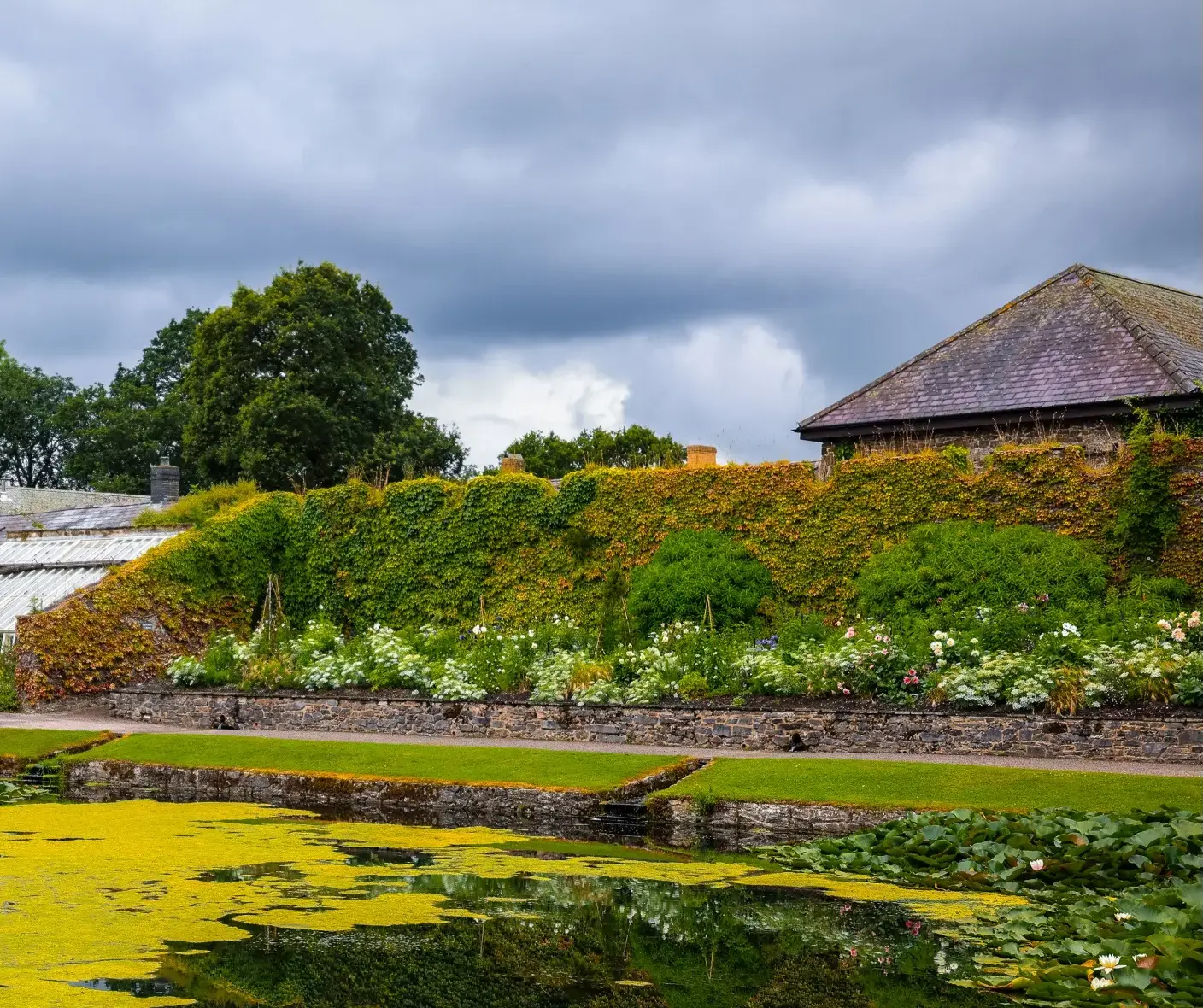
Patchwork fields and rolling green mountains characterise the fertile Tywi Valley, a region shaped by the meandering course of its river. Within the centre of this verdant plain are lonely hills, rising with a majesty that commands attention, and ruins almost reclaimed by Mother Nature’s unyielding grasp. Ancient yew trees cast shadows over moss-covered paths, and unending forests are so dense that sunlight fights to illuminate their core. These are backed by fields brimming with peaceful livestock, evoking a scene of pure tranquillity.
One of Britain’s finest gardens is hidden within this quiet haven: Aberglasney. Here, blooming roses mingle with the subtle and fresh scent of hydrangea, bolstered by delicate floral notes, aromatic herbs and the silence that makes the surrounding valley so magical. Aberglasney’s 10-acre site has year-round dramatic floral displays with a kaleidoscope of hues, formations and sizes set within 20 different types of gardens.
But Aberglasney is more than a horticultural treasure; it is steeped in almost five centuries of history, making it a living, breathing chronicle of the past. Since the medieval period, the estate has been home to many prominent people: poets, artists, a bishop, a High Sheriff, architects, solicitors, drinkers and teetotallers. One of the first mentions of the property was of ‘nine green gardens’ in a medieval poem. Aberglasney’s story was not properly recorded until the days of Sir William Thomas, who was knighted by King Henry VIII and later became Carmarthenshire’s first High Sheriff.
The house’s most significant developments occurred in the 18th and 19th centuries, especially under the ownership of the Philipps and Walters Philipps families. Thanks to them, the Grade II-listed mansion gained its most distinctive features: a Georgian-inspired central portico doorway and symmetrical bay windows. By the mid-20th century the estate had fallen into disrepair, but it was later saved by the Aberglasney Restoration Trust in 1995.
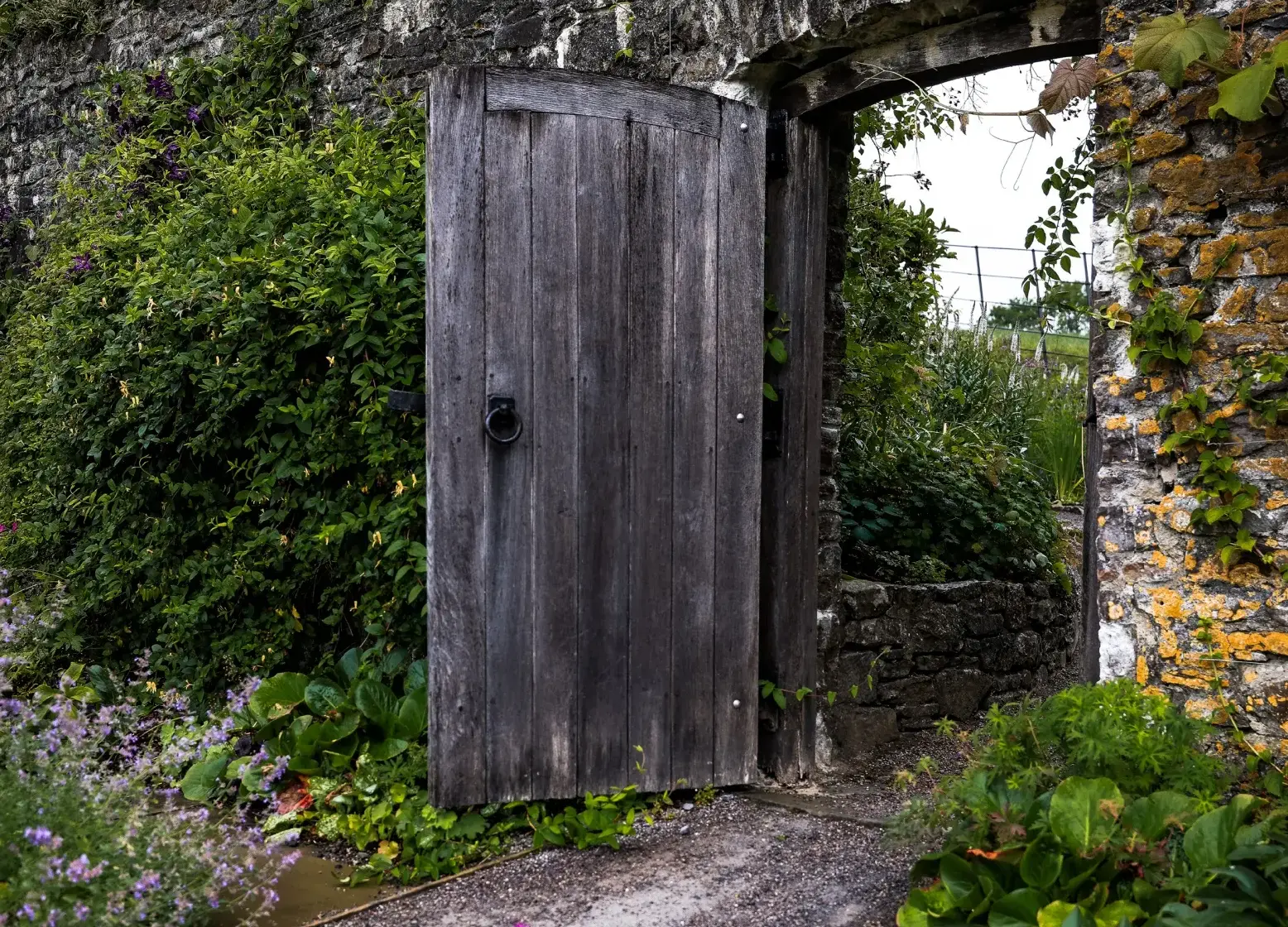
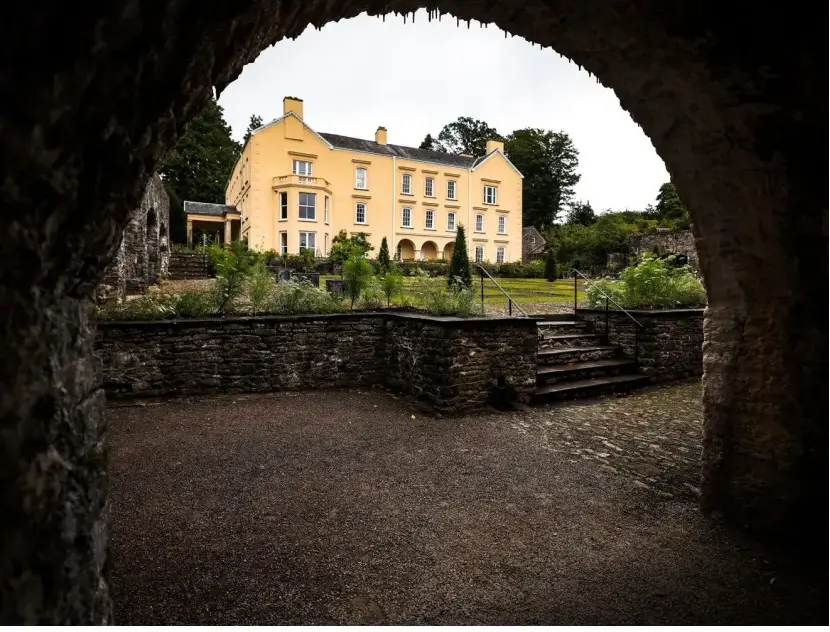
A living chronicle
As soon as you enter the gated grounds, you are drawn into a world of flowers and heritage. The flowers are everywhere, unavoidable as you are directed through the floral-themed gift shop and small garden centre before arriving at the North Lawn. In spring, sweeping displays of golden-hued daffodils take precedence over the immaculate lawns.
This approach to the house has been used by many generations, and to the lawn’s right is an enchanting tunnel formed by ancient yew trees planted more than 300 years ago by the Dyer family. Peering into its depths, you will see branches that have grown and intertwined overhead, creating a mystical passageway. The tunnel’s gnarled, twisting trunks and the deep green of the yew leaves give it an otherworldly feel, as if stepping into a secret, time-forgotten passage that once fascinated Victorian visitors.
The mansion is a backdrop to this Yew Tunnel, and inside is an indoor heated garden called the Ninfarium. It forms part of the house, and the name is derived from the gardens at Ninfa, found at the bottom of the Lepini Mountains near Rome. The Caetani family imaginatively planted the whole medieval village there and, incidentally, financially supported the Welsh poet Dylan Thomas.
The Ninfarium is in the oldest part of the building and consists of two storeys of dilapidated walls and a modern glass roof. Exposed wooden walls and windows are overgrown with exotic greenery and subtropical plants. Long, elegant fronds of Cyathea cooperi, or tree ferns, unfurl from tight coils to form a delicate canopy. Lily-like flowers spring seemingly out of nowhere while exotic plants hang from the ruins.
Gardens through the seasons
From here, you will naturally progress to the Cloister Garden, widely considered Aberglasney’s most extraordinary and legendary feature and the only surviving structure of its kind in the UK. Dating from the 1600s, the three-sided arched parapet walkway is excellent for valley views. Television viewers might also recognise it from the series A Discovery of Witches.
The pool garden can be seen from the walkway’s terrace, complete with a rectangular pond and blooming water lilies. Fronting this is a charming tearoom serving homemade, freshly prepared lunches and afternoon tea. Adjacent to the pond are lofty woodlands and the Sunken Garden; Pigeon House Wood is a secluded area of deciduous trees, while Jubilee Woodland harbours huge trees among its trickling streams. The Sunken Garden has a private seating area and a calming water fountain designed by William Pye.
Aberglasney Gardens remains open daily and continues to welcome visitors to its historic gardens, mansion, shop and tearooms. This status was checked with the attraction’s official website before publication.
This Flashback Friday feature is republished from West Wales Life & Style, September/October 2024, pages 21–24. The original editorial has been preserved, with minor copy-editing and a current-status note added for September 2026.