Outdoors & Coast
Dale Bay Seagrass Restoration Gets a Boost from Local Fishers
Local ingenuity gives a marine restoration project a welcome lift.
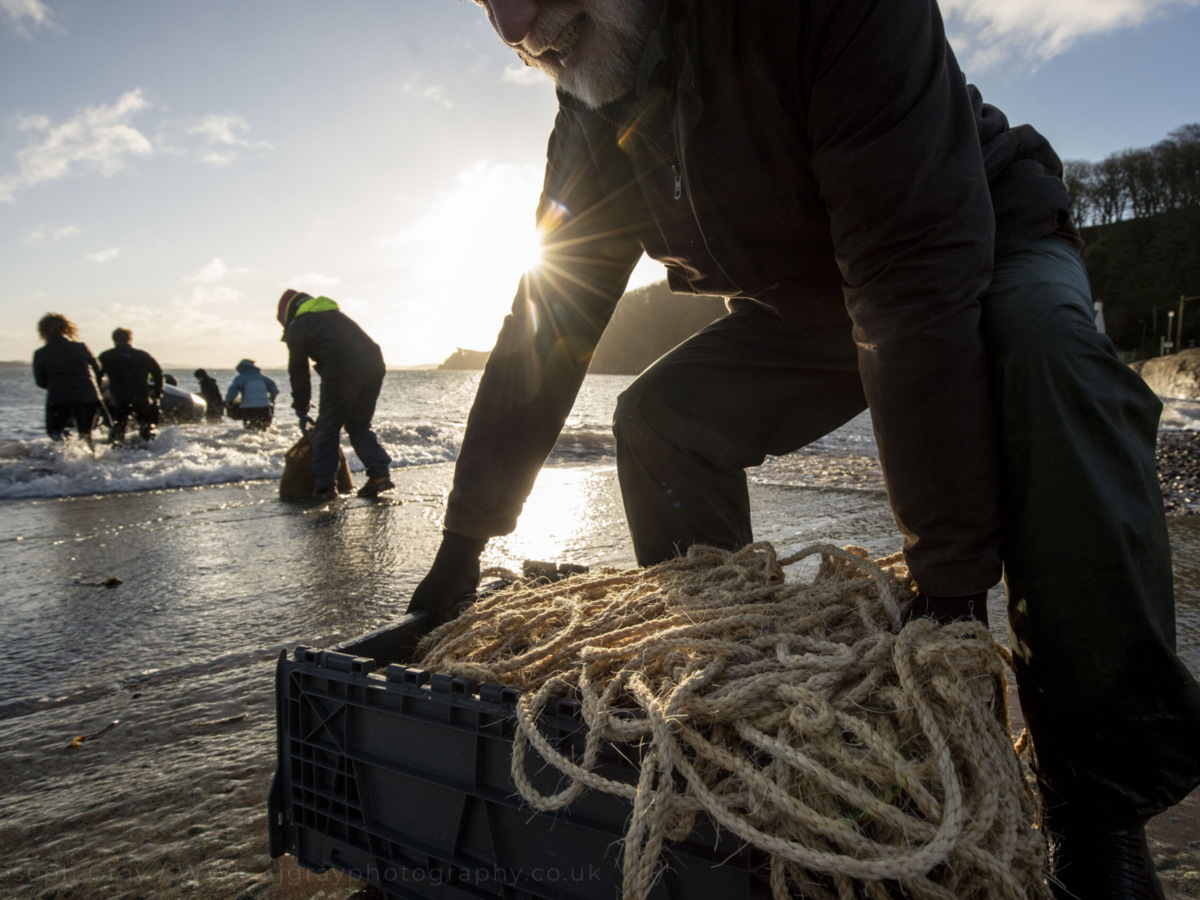
In Dale Bay, Pembrokeshire, a collaboration between local fishers and marine conservation charity Project Seagrass is showing positive results for both sustainable fishing and seagrass restoration. Dale Bay is the location of an ongoing seagrass restoration project, delivered by South Wales based charity Project Seagrass and overseen by the Dale Seagrass Stakeholder group (a group made up of local individuals across different sectors). The project began as a way to boost the natural seagrass meadow in the bay, trialling new techniques and raising awareness of the importance of seagrass for local biodiversity, water quality, and fish populations.
Mark Gainfort, from Lilly May Fishing, has worked with Project Seagrass from the start of the project to assist in site selection and deploying monitoring equipment. As the project has progressed, Mark noticed he was sometimes tearing up seagrass as he lifted his pots to retrieve crab and lobster. In response to this, Mark designed a raised shellfish pot with short mesh legs to lift the gear just off the seabed. Made by local boat builders Robust Boats, the pots were deployed over the last two seasons with catch monitored over that time. Early results are positive showing that the new pot design is effective for storing crab catch, with some tweaks required for lobsters, whilst also reducing mud build-up and reducing the impact on the seagrass. Mark said: “Overall, it has worked very well in seagrass – I would recommend using them as storage pots in shallow water where the seagrass is as the pots have very low impact on the grass compared to steel bar bottoms thanks to the mesh legs.” Project Seagrass is continuing to plant seagrass in Dale Bay alongside carrying out regular monitoring to determine seagrass recovery and resilience. A spokesman for the project added: “It will be interesting to see how the natural meadow responds to the reduced impact from shellfish pots over time.”
Local fishing knowledge supports restoration
“Overall, it has worked very well in seagrass – I would recommend using them as storage pots in shallow water where the seagrass is as the pots have very low impact on the grass compared to steel bar bottoms thanks to the mesh legs.”
Beyond Dale, fishers, anglers, spearfishers, aquaculture workers, and seafood gatherers have been taking part in a survey to share their knowledge about seagrass and fishing areas. This information is helping identify the best sites for future seagrass restoration work. Full results are still to be released, but early insights already show just how valuable local experience is in guiding conservation. Project Seagrass will also be hosting a series of events to celebrate sustainable local seafood and the amazing role seagrass plays in healthy seas. This work is made possible thanks to funding from the Nature Networks Programme which is being delivered by the National Lottery Heritage Fund on behalf of Welsh Government, and Rebel Restoration. Established in 2013 by a group of seagrass scientists, Project Seagrass is a global facing marine conservation organisation securing a future for seagrass.
collaborating with communities; by leading, championing and communicating scientific research; and taking direct action to map, conserve, and restore seagrass meadows globally. Project Seagrass seeks to reach a world in which seagrass meadows are thriving, abundant, and well managed for people and planet.