Culture & Heritage
National Eisteddfod in Pembrokeshire: Celebrating 850 Years of Welsh Culture
The National Eisteddfod returns to West Wales 850 years after the celebrated gathering at Cardigan Castle.
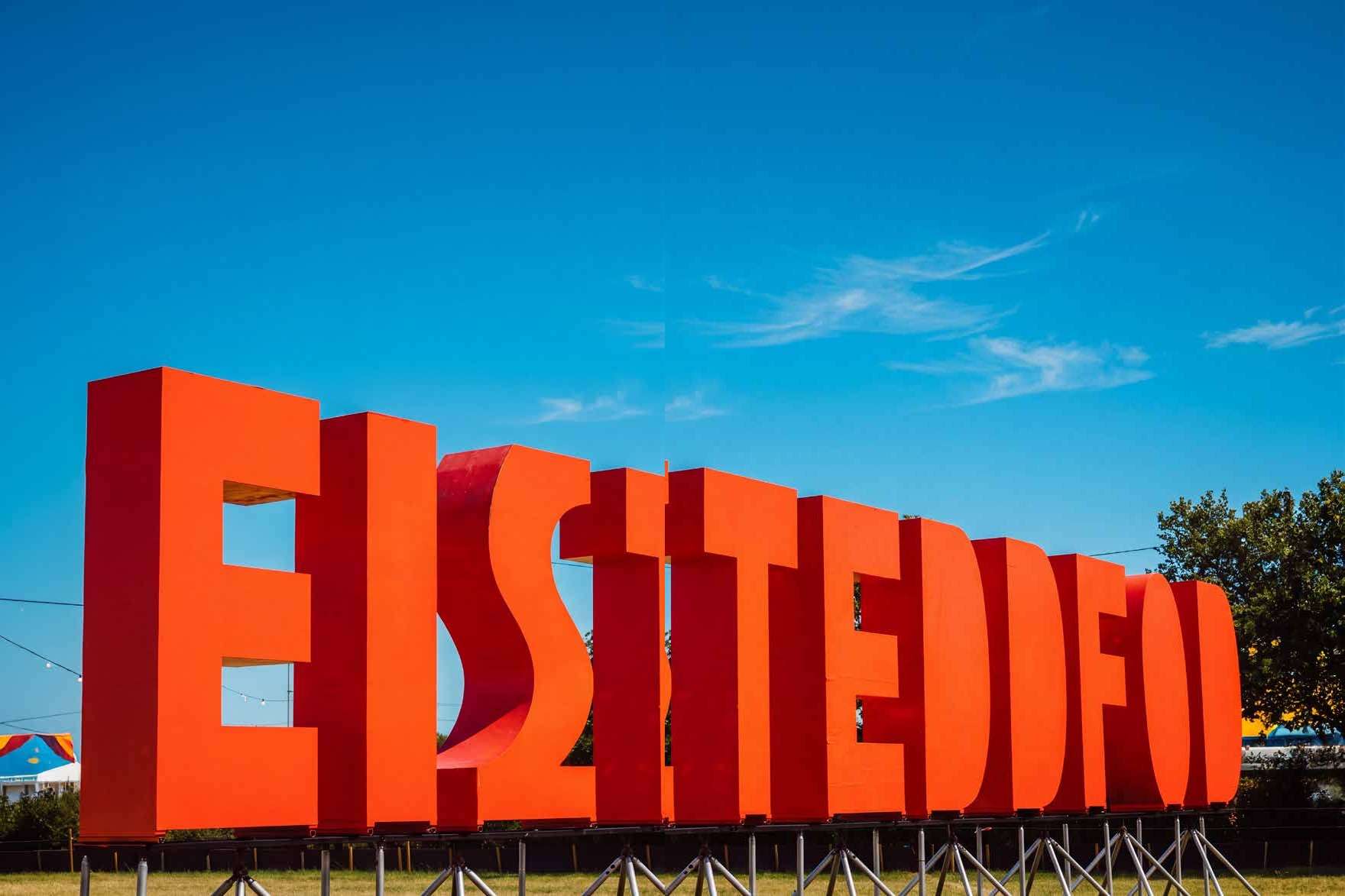
The celebration of Welsh culture returns to where it first began, exactly 850 years ago The roads of north Pembrokeshire have a habit of slowing you down. They wind between flower-filled hedgerows and rolling pasture before opening onto vast skies, ancient woodland and the glittering waters of the Teifi estuary. This is a landscape that sets its own pace, that encourages the unsuspecting visitor to slow down, to stop and to linger. This is the kind of quiet that feels increasingly rare in this hectic non-stop world. But for one week this August, this idyllic, peaceful corner of west Wales will become the cultural heart of the nation. From August 1-8, the fields of the sleepy parish of Llantwd – or Llantood as it is often known in English – near Cilgerran, close to the Ceredigion border will host Eisteddfod y Garreg Las, the 2026 National Eisteddfod of Wales.
The National Eisteddfod is Europe's largest celebration of language, literature, music and the arts. More than 100,000 visitors are expected to gather at the site for eight days of performances, competitions, exhibitions and conversation to celebrate Welsh culture, heritage and language. But this year's festival carries a significance that extends far beyond its annual return.
It marks the 850th anniversary of the first recorded eisteddfod. In 1176, the Welsh ruler Lord Rhys hosted a remarkable gathering at Cardigan Castle, inviting poets and musicians from across Wales—and beyond—to compete for richly endowed chairs. It was an extraordinary statement of confidence and cultural ambition, celebrating the creative arts at a time when much of medieval Europe was defined by conflict and conquest. That event has long been recognised as the earliest documented eisteddfod, the beginning of a tradition that has endured through eight and a half centuries of political upheaval, industrial revolution and social change. There could hardly be a more fitting place to celebrate that legacy than here, where it all began. The festival's name, Garreg Las—"Blue Stone"—is itself rooted in the landscape. It references the Preseli Hills, whose distinctive bluestones famously made their way to Stonehenge some 180 miles away. Whether viewed as geology, archaeology or mythology, the Preselis remain one of Britain's most evocative landscapes: ancient, mysterious and unmistakably Welsh.
backdrop to a festival that has always drawn strength from its surroundings. For visitors unfamiliar with the National Eisteddfod, comparisons can only go so far. It has the intellectual curiosity of a literary festival, the atmosphere of a great county show, the creative energy of a contemporary arts showcase and the conviviality of a village fête, yet it is ultimately unlike any of them. Each year, the Eisteddfod constructs an entire temporary town—the Maes, or field—complete with theatres, exhibition spaces, galleries, cafés, restaurants, independent retailers and broadcasting studios. It is a place where internationally acclaimed authors share coffee queues with local schoolchildren preparing for competitions, where politicians and farmers debate current affairs over lunch, and where visitors can move effortlessly between contemporary art installations, choral performances and discussions on architecture, climate change or artificial intelligence. The Welsh language is the festival's heartbeat, spoken naturally throughout the week and celebrated as the medium of a vibrant modern culture. Yet the Eisteddfod is far from inaccessible. English-language interpretation, bilingual signage and an instinctively welcoming atmosphere ensure that newcomers are invited into the experience rather than left on its margins. For many first-time visitors, it is their first encounter with a Welsh language flourishing confidently in every aspect of public life. That confidence defines the festival itself. While its medieval roots are never forgotten, the Eisteddfod has consistently reinvented itself, embracing new art forms, new ideas and new audiences. Alongside the celebrated ceremonies of the Chairing and Crowning of the Bard sit exhibitions by leading contemporary artists, performances by emerging musicians, conversations with novelists, scientists and historians, and a lively programme exploring the issues shaping modern Wales. Ultimately though, the National Eisteddfod has entertainment at its heart and the highlight of this year’s festival will undoubtedly be the performance of legendary Welsh rock band The Super Furry Animals while comedian, podcast star and TV regular Elis James will take centre stage for a stand-up show in the Pavillion. In all, more than a hundred performances will take place over the course of the week so there is something for everyone to enjoy. Food has become an equally compelling reason to visit. West Wales has quietly established itself as one of Britain's most exciting gastronomic destinations, and the Eisteddfod offers an ideal introduction. Artisan cheesemakers, organic growers, craft brewers, distillers, bakers and seafood producers gather to showcase the extraordinary richness of the region's natural larder.
Pembrokeshire lamb, Cardigan Bay crab, traditional bara brith served alongside speciality coffee, and menus that celebrate seasonality with understated confidence rather than unnecessary flourish. The surrounding area rewards exploration long after the festival closes each evening. Cardigan itself has undergone a remarkable renaissance over the past decade, with its restored castle, independent A handpicked range of sustainable loveliness, including organic, biodynamic, natural, low sulphite and minimal intervention wines. Always at hand with friendly advice to find the right wine for you!
shops and thriving arts scene creating one of Wales's most appealing market towns. To the west lies the Pembrokeshire Coast National Park, where dramatic cliffs, hidden beaches and the 186-mile Coast Path offer some of Britain's finest walking. Inland, the Preseli Hills provide a quieter, more contemplative landscape of prehistoric monuments, open moorland and sweeping views towards the sea. For travellers, the National Eisteddfod becomes more than an event; it becomes the centrepiece of a summer holiday that combines culture with landscape, gastronomy and craftsmanship. It is as easy to spend the morning listening to an award-winning poet, the afternoon browsing the studios of local ceramicists, and the evening watching the sun sink beyond the Atlantic as it is to lose an entire day immersed within the festival itself. Perhaps that is the enduring genius of the Eisteddfod. It refuses to separate culture from everyday life. Poetry is discussed over lunch. Music spills from every corner of the Maes. Children compete in dance and recitation with the same seriousness that adults bring to literature or politics. Creativity is neither niche nor elite; it is woven into the rhythm of community.
Eight hundred and fifty years after Lord Rhys welcomed poets and musicians to Cardigan, the National Eisteddfod returns not as a historical re-enactment but as living proof that culture can remain central to national life. In an era when authenticity is increasingly sought yet rarely found, Eisteddfod y Garreg Las offers something genuinely distinctive: a celebration that belongs utterly to its place while extending an open invitation to the world. For anyone curious about contemporary Wales, there may never be a better moment to visit. The anniversary will undoubtedly be historic. But it is the warmth of the welcome, the beauty of the landscape and the quiet confidence of a nation celebrating its own creativity that visitors are most likely to remember long after they leave west Wales behind.
egryn Jones, Chief Executive of Pembrokeshire Coast National Park Authority, has been named among those to be honoured by Gorsedd Cymru at this year’s National Eisteddfod. The honour recognises individuals from across Wales for their achievements and their contribution to the nation, the Welsh language and local communities. Tegryn will be admitted to the Gorsedd in the Blue robes, which are awarded to those who have given distinguished service in areas including public life, local and national activity, journalism, media, sport, science and law. Originally from Lampeter and a fluent Welsh speaker, Tegryn has played a prominent role in Welsh public life, with a career spanning environmental, educational and community leadership. Before joining Pembrokeshire Coast National Park Authority, he served as Chief Executive of Keep Wales Tidy and also worked for the General Teaching Council for Wales.
He was nominated for his work in education, youth work and the environment and for developing environmental initiatives at a local and national level. In Pembrokeshire, he is also closely associated with the development of Welsh-medium education through his longstanding involvement with Ysgol Caer Elen in Haverfordwest where he was the first Chair of Governors. Tegryn said: “It is a great honour to be recognised by Gorsedd Cymru, particularly in a year when the National Eisteddfod returns to Pembrokeshire for Eisteddfod y Garreg Las. The Welsh language belongs to all our communities, and I have been very fortunate to Tegryn Jones, Chief Executive of Pembrokeshire Coast National Park Authority, has been named among those to be honoured by Gorsedd Cymru at this year’s National Eisteddfod.
work with so many people who care deeply about its future, whether through education, culture, the environment or public service. “The Pembrokeshire Coast National Park is one of jewels of Wales and provides an outstanding landscape that contributes to the environmental, social and economic goals that are essential to Wales’ future. I am very fortunate to lead the National Park Authority and extremely proud that this work has been recognised by the Gorsedd.” This year’s National Eisteddfod, Eisteddfod y Garreg Las, will be held in Llantwd, North Pembrokeshire, from August 1-8. The event will be especially significant as it marks 850 years since the first recorded Eisteddfod was held in Cardigan in 1176, just across the river from this year’s Maes.
The National Eisteddfod returns to Pembrokeshire
very August, somewhere in Wales, an entire town springs into existence almost overnight. Across fields that only a few weeks earlier were home to sheep or cattle, avenues appear, pavilions rise, cafés open, bookshops trade and music fills the air. For eight extraordinary days, more than 100,000 visitors gather for the National Eisteddfod of Wales — a festival unlike any other in Europe. Of course, what might – to the unsuspecting visitor – have appeared likesome mythical, mystical apparition worthy of the Welsh legends found in the stories of the Mabinogion, has in reality taken months in the planning. To describe the Eisteddfod simply as an arts festival would be like calling the Olympics a sports day: think Glastonbury, Notting Hill Carnival, Hay Festival and even a little bit of Oktoberfest all rolled into one – and then double it. The National Eisteddfod of Wales is simultaneously a literary festival, music festival, craft fair, agricultural show, language celebration and national gathering. It is both deeply traditional and strikingly contemporary, rooted in centuries of history while constantly reinventing itself for the present day. Yet, it is something even more, something deeper than that; it is the heartbeat of Welsh culture.
The word eisteddfod – roughly pronounced Eye-steth-vod – derives from the Welsh for "session" or "assembly", and competitions between poets and musicians can be traced back to the courts of medieval Welsh princes. The modern National Eisteddfod, however, took shape during the nineteenth century, becoming a focal point for the preservation and promotion of Welsh language and culture during a period of profound social change. It is important to recognise however that here; culture comes with both a capital and a lower case ‘C’. Today, the festival moves to a different location each year, alternating between north and south Wales. Its temporary home— known simply as the Maes, or "field"—becomes a vibrant cultural village where every generation finds its place. Families wander between exhibitions, children compete in dance and recitation, choirs rehearse, publishers launch new books, artists unveil their latest work and politicians, broadcasters and academics mingle with farmers, students and holidaymakers.
For visitors unfamiliar with Welsh, one of the first surprises is that almost everything happens bilingually. Welsh is the festival's principal language, heard naturally in conversations, announcements and performances, yet English translations and interpretation are widely available. Rather than feeling exclusive, the experience offers a rare opportunity to witness the language being used with complete confidence in every sphere of public life—from high literature to ordering lunch. At the heart of the festival lie its competitions. Thousands of performers spend months preparing to compete in disciplines ranging from solo singing and orchestral performance to poetry, drama, folk dancing and creative writing. Winning is prestigious, but participation is equally valued; the Eisteddfod has long been a celebration of excellence achieved through community. The festival's most iconic From custom embroidery and printing to full uniform solutions, we make sure you look the part and feel proud of your brand.
ceremonies are among its most theatrical. The crowning of the Bard and the Chairing of the Bard honour outstanding poets in elaborate rituals conducted by members of the Gorsedd of the Bards, dressed in flowing robes of white, blue and green. To the uninitiated, the spectacle can seem wonderfully eccentric, but beneath the pageantry lies a serious commitment to recognising literary achievement in one of Europe's oldest living languages. Yet focusing only on tradition and the Druid-like Bards would be to miss the point entirely. The National Eisteddfod is equally a showcase for modern Wales. Contemporary musicians perform alongside folk artists; cutting-edge visual art sits beside traditional crafts; conversations about climate change, artificial intelligence and politics share the programme with poetry readings and choral concerts.
The festival has become a place where Welsh identity is explored and shaped in the context of the modern world rather than preserved in aspic. Food, too, plays its part. Local producers showcase their talents, offering everything from artisan cheeses and smoked seafood to craft gin, organic vegetables and freshly baked bara brith. Independent designers, jewellers and makers display work that reflects Wales's growing reputation for creative and artistic entrepreneurship, making the Maes as much a destination for discerning shoppers as for culture lovers. Perhaps the Eisteddfod's greatest achievement is that it refuses to separate everyday life from artistic endeavour. Here, poetry is not an obscure pursuit for the few but front-page news; children grow up believing that singing in a choir or writing a poem is something worth celebrating on a national stage. Culture is woven into the fabric of ordinary life rather than reserved for elite institutions, and everyday life is embroidered into the rich, diverse tapestry of high culture. For international visitors, the National Eisteddfod offers something increasingly rare: an authentic expression of national identity that is confident and dynamic without being exclusionary, proudly Welsh while warmly welcoming outsiders. It is a place where ancient traditions coexist comfortably with contemporary creativity, and where the Welsh language is encountered not as a relic of the past but as the vibrant heartbeat of a modern nation. Spend a day wandering the Maes and it quickly becomes clear that the National Eisteddfod is much, much more than a festival. It is Wales showcasing itself to the world—not through monuments or museums, but through the living voices, music, stories and imagination of its people.
nsuspecting visitors to West Wales were in for the surprise of their lives in late June when an iconic, larger than life resident set off on a tour of towns and villages in the region. The 15-foot-tall Lord Rhys, accompanied by his massive hound Teifi, was woken from his centuries-long slumber to welcome the arrival of the National Eisteddfod of Wales back to the place where it all began some 850 years ago. After waking from his deep sleep in St Davids Cathedral, the medieval lord – and host of the very first eisteddfod ever held in Wales – spent a week visiting towns and villages across y Garreg Las before finally returning to Cardigan Castle, his former home, on Saturday, June 27. A crowd of more than 8,000 people gathered in Cardigan to greet the arrival of the five-metre-high puppet, created by Small World Theatre, Cardigan, as he returned home to mark the 850th anniversary celebrations of the National Eisteddfod.
A full day of activities and performances was held at the castle to mark the event, with a spectacular procession through the town’s streets and along the River Teifi as the pinnacle, as the Eisteddfod recreated the excitement of the first Eisteddfod in 1176, with poets and musicians arriving Lagers, Guinness on tap and a large array of bottled ciders, wine, spirits and soft drinks as well as options for 0% & Gluten Free.
Dog & Family Friendly • Large Beer Garden Pool, Darts & Sky Sports • Pizzas, Pub Classics & Local Produce.
by boat and horseback to perform before Lord Rhys - Yr Arglwydd Rhys in Welsh - and his entourage. The giant puppet, powered by a team of dedicated helpers, had travelled on an iconic journey around the Garreg Las area, beginning in St Davids where the 2026 Eisteddfod Chair and Crown were unveiled, and visiting Cenarth, Newcastle Emlyn, Llangrannog, Talgarreg, Goodwick, Maenclochog and Cardigan. He was accompanied throughout his journey by his loyal hound, Teifi — a giant dog puppet on wheels created by Skeleton Crew from Cilgerran. Upon his return to Cardigan at the end of the journey, he was joined by a huge procession of performers, local community groups, Eisteddfod committees, and a troupe of street-theatre wolves who had travelled all the way from the Spraoi International Street Arts Festival in Waterford, Ireland. Reflecting on the week, John Davies, Chair of the Executive Committee of Eisteddfod y Garreg Las, said, “It would have been an honour to lead the executive committee of the National Eisteddfod in any year, but to do so when the festival is celebrating its 850th anniversary has been a truly special experience.
“The past week has been thrilling. We have taken the Eisteddfod out into the communities of Garreg Las in the most visible way possible, and the response has been truly exceptional. Local people have come out to support and marvel at the Lord Rhys and Teifi and have been able to take part in a ceremony and event within their own communities before the festival itself. “I hope that Yr Arglwydd Rhys himself would have enjoyed the journey, and especially the celebration on Saturday, which was a modern recreation of what happened on Christmas Day 1176, when everyone gathered for the first Eisteddfod. Eight hundred and fifty years is a long time, and it’s remarkable that the Eisteddfod continues to develop and evolve annually as a dynamic and modern festival offering something for everyone. “I would like to thank sincerely everyone involved in the project, from the original seed of an idea developed by Eisteddfod officers and our hardworking local committees to the incredible extravaganza that came to life before our eyes over the past week, thanks to the creative team, led by Marc Rees.
Celebrating 850 years of Welsh culture
“Thanks also to our generous funders. Without them, we would not have been able to deliver such a project. Thanks to the National Lottery Heritage Fund and the Welsh Government for allowing us to realise such an idea, and thanks to Wales Arts International, Culture Ireland, Aberystwyth University and Cardigan Castle for their generous support over recent months. “And finally – to answer everyone’s questions – Yr Arglwydd Rhys will be coming to the Eisteddfod. He’ll arrive on the Maes on Saturday August 1, and representatives from the local community will take part in a special ceremony to welcome him back to the Eisteddfod – and of course, Teifi the dog will follow him faithfully, just as he has throughout the week.” There’ll be a number of activities to celebrate the 850th anniversary around the Maes throughout the week, including a brand-new show by Cabarela, in Y Babell Lên from Sunday to Thursday evenings.
More information about these will be released soon. Eisteddfod y Garreg Las is held in Llantwd, north Pembrokeshire, from August 1-8. For more information and tickets, go to eisteddfod.wales.
here are journeys that are measured in miles, and then there are those measured in moments. This extraordinary adventure through Canada and Alaska belongs firmly in the latter category, revealing some of North America’s most breathtaking landscapes at a refreshingly unhurried pace. Beginning amid Alberta’s endless prairies, the scenery transforms dramatically as the snow-capped Canadian Rockies rise on the horizon, introducing a landscape of turquoise glacial lakes, soaring peaks and ancient icefields. A journey aboard the iconic Rocky Mountaineer offers a front-row seat to this spectacular wilderness, where panoramic windows frame rushing rivers, waterfalls and forests stretching beyond the horizon, while expert hosts bring the landscapes to life with stories of the railway, wildlife and Indigenous heritage. Time in Banff invites moments of quiet reflection before vibrant Vancouver provides the perfect contrast, where mountains meet ocean ahead of an unforgettable voyage north. Sailing through Alaska’s Inside Passage, each day unfolds gently with coffee on deck, wildlife watching and ever-changing coastal scenery. Glacier Bay delivers a humbling encounter with immense blue glaciers, while frontier towns such as Skagway and Ketchikan offer fascinating glimpses into the region’s Gold Rush past. Along the way, encounters with whales, bears, bald eagles and harbour seals become treasured highlights. Thoughtfully curated throughout, this is travel at its most rewarding—where every detail has been arranged, leaving guests free to immerse themselves in the scenery, the stories and the rare luxury of slowing down.
Milk Wood is a destination restaurant celebrating the best of seasonal dining in West Wales. From relaxed brunches and leisurely lunches to elegant evening dining, our menus are complemented by expertly crafted cocktails, a welcoming bar, and a terrace menu perfect for al fresco drinks and dining.
Much of our fruit, vegetables, and herbs are grown in our own pesticide-free kitchen garden, providing the freshest ingredients for our chefs and reflecting our commitment to seasonal, sustainable cooking.
Set against breathtaking views across the estuary, Milk Wood offers a memorable dining experience where exceptional food, warm hospitality, and one of West Wales' most spectacular landscapes come together.
Mwynhewch ddiwrnod i’r brenin wrth ymgolli mewn hanes yng Nghastell a Melin Heli Caeriw. Dringwch i fyny’r tyrau a mwynhau golygfeydd godidog yn Atyniad Ymwelwyr y Flwyddyn Sir Benfro.
Dewch o hyd i’ch gwreiddiau Celtaidd a dysgu am fywyd yng Nghastell Henllys yn y gorffennol - yr unig Bentref Oes Haearn yn y DU a gafodd ei ailadeiladu ar yr union safle lle’r oedd ein hynafiaid yn byw 2,000 o flynyddoedd yn ôl.
Immerse yourself in history with a day fit for a king at Carew Castle and Tidal Mill. Climb up the towers and enjoy stunning views at Pembrokeshire’s Visitor Attraction of the Year.
Discover your inner Celt and find out about life in the past at Castell Henllys - the UK’s only Iron Age Village reconstructed on the exact site where our ancestors lived 2,000 years ago.