
Culture & Heritage
Rhydwilym Baptist Chapel: The West Wales Church That Influenced America
The extraordinary history and global influence of Rhydwilym Baptist Chapel.
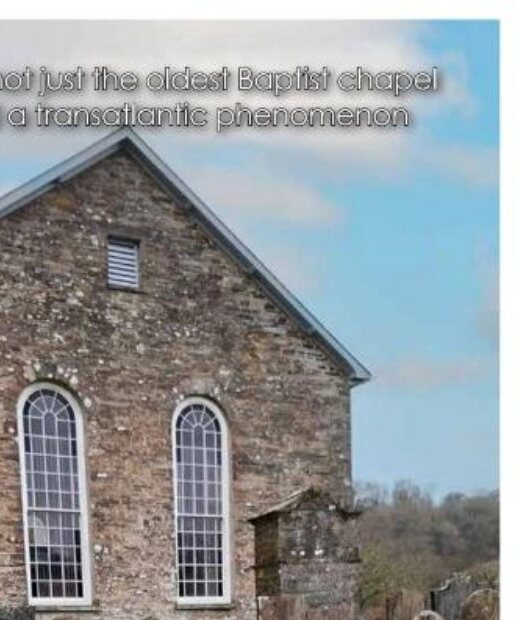
Rhydwilym Chapel is not just the oldest Baptist chapel in the world, it inspired a transatlantic phenomenon hen we think of the most iconic and important historical sites in West Wales, there are any number that might spring to mind: St David’s Cathedral, Pembroke Castle, Carreg Cennen, Strata Florida, Pentre Ifan, Carmarthen’s Roman amphitheatre, to name but a few. But when it comes to claiming a far-reaching influence that is still being felt to this day, few – if any – can compare with that of a humble, seemingly forgotten little chapel in the wilds of northern Pembrokeshire. In fact, it might be argued that Rhydwilym Baptist Chapel, tucked There is even an argument to say that the entire Southern Baptist movement in the United States sprang from the gushing waters of the Cleddau Ddu.
away far off the beaten track near Efailwen, has had a greater impact on the world beyond Welsh shores than any other person, place or building in history. The chapel – or at least its early congregation – has quietly influenced millions of people across numerous generations, shaping the culture of modern America to the present day. There is even an argument to say that the entire Southern Baptist movement in the United States sprang from the gushing waters of the Cleddau Ddu. The original chapel at Rhydwilym was built in 1701 on the banks of the little river – the current structure has been rebuilt several times over the past 325 years, but the faith had a flourishing – if secretive – congregation in the region even earlier.
The accepted history of Rhydwilym states that Baptist gatherings were held in caves, private houses and in the open air as early as 1667. This was in a time when followers of Nonconformist beliefs – such as those held by Baptists – were persecuted by the Crown and the state-sponsored Church of England, and so gatherings of any kind were acts both of devotion and defiance to the powers-that-be. Despite the threat to life and liberty that such gatherings incurred, the congregation of Rhydwilym is said to have included members from all across Pembrokeshire, western Carmarthenshire and southern Ceredigion; an incredible reach in a time before roads and when few – if any – owned a horse. However, despite its storied past – Rhydwilym is believed to be the oldest surviving active Baptist chapel anywhere in the world – it was the members of its congregation who sought to escape the oppressions faced at home who had the greatest impact.
In June 1701, a delegation from Rhydwilym made up of sixteen members likely walked to Milford Haven from where they boarded a ship named either the James and Mary or the John and Mary (sources differ) and sailed to America. The group – Minister Thomas Griffith, Griffith Nicholas, Evan The Welsh Tract Baptist Church in Delaware (pictured today) was founded by members of the Rhydwilym congregation who travelled to America in 1701. It would become a stepping stone for many more arrivals from West Wales.
A chapel with global influence
Edmond, John Edward, Elizeus Thomas, Enoch Morgan, Richard David, Elizabeth Griffith, Lewis Edmond, Mary John, Mary Thomas, Elizabeth Griffith, Sioned David, Margaret Matheas, Sioned Morris and James David – arrived in Pennsylvania in early September, joining another Baptist congregation on the Pennepek River near Philadelphia.
Stephen Hollingsworth was a member of the Welsh Tract Church in Delaware before he moved to North Carolina.
Interestingly, the believed leader of the group, Rhys Rhyddarch arrived a few months later. His delayed departure might well have been due to the health of his wife, Catherine. Church records show she died on November 12, 1701, either in Pennsylvania or possibly at sea during the arduous journey. In 1702, another twenty-one congregants from Rhydwylim arrived on the Pennepek to join their brethren.
From Pembrokeshire to America
A dispute over interpretations of Baptist rites saw the Rhydwilym congregation leave Pennepek in 1703, setting off to form their own community roughly 35 miles to the southwest in a section of a thirty-thousand-acre block of New Castle County assigned specifically for Welsh settlers. The area in which they founded their new home would become known as the Pencader Hundred. This Welsh Tract Baptist Church would welcome scores more arrivals from Rhydwilym, West Wales and beyond over the following decades. It has been estimated that as many as 170 members of the Rhydwilym congregation would ultimately emigrate to New Castle County. However, this was merely the beginning. By 1711, members of the Pencader congregation had founded a second church. The Great Valley Baptist Church of Philadelphia was formed just fifteen or so miles from the Pennepek church that had welcomed arrivals from Wales just a decade earlier.
Over the course of the next two decades, members of the Pencader congregation had founded chapels in the Cape Fear River region of North Carolina and on the Pee Dee River in South Carolina. From North Carolina, they spread deep into the colony’s interior and on into what would eventually become Tennessee and Kentucky; similarly, the descendants of those Planning a wedding, birthday, or special event? Host it at our charming countryside pub in Wolfscastle! With a stunning setting and mouthwatering menus crafted by our chefs, we’ll make your celebration unforgettable. Just tell us what you need—we’ll handle the rest!
who founded the Welsh Neck settlement in South Carolina would move into Georgia and beyond. The influence of the descendants of those who settled in the Pencader Hundred spread throughout the southern colonies throughout the eighteenth century and continued to do so into the new states following the Revolutionary War well into the nineteenth century and beyond. Currently, the Southern Baptist Convention – a “cooperation” of independent churches throughout the southern states – is recognised as the world’s largest Baptist organisation, the largest Protestant, and the second-largest Christian body in the United States. It boasts more than thirty-four thousand churches and almost thirteen million members. While there is no formal official narrative that joins the dots between the Southern Baptist Convention – it is, after all, a body of autonomous, independent churches – and the original congregation in the Pencader Hundred, its formation in 1845 followed almost a century-and-a-half of the descendants of that first group creating new settlements and spreading the Baptist message throughout the South. It does then seem entirely reasonable to speculate that a decision taken by a handful of people in the picturesque little valley on the banks of the Cleddau Ddu some 325 years ago, might well have spawned the entire Southern Baptist movement and played an integral part in the shaping of the modern United States of America – an impressive outcome for a group of foot-sore believers whose first meetings took place in a cave.